HomeDangerous goods
Dangerous goods importAuthorised dangerous goods, imported by the book.
From lithium batteries and paints to pyrotechnics and life jackets, Cargoa handles classification, permits, packing, air freight, clearance and delivery for businesses importing regulated goods into Nigeria.
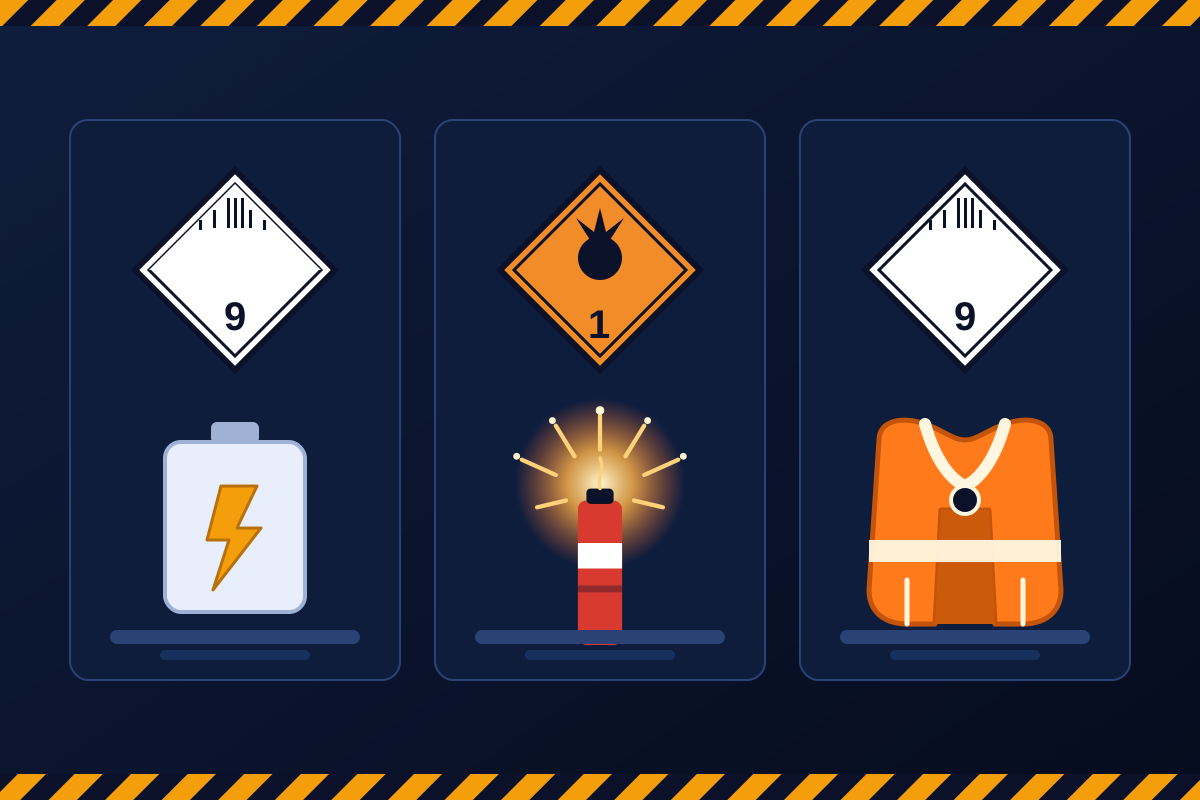
Dangerous goods are more common than most businesses think.
If your product is flammable, corrosive, pressurised, powered by a lithium battery or contains a gas cylinder, it is likely regulated. These are the goods we are asked about most.
- Lithium batteriesUN3480 / UN3481
- Paints and adhesivesUN1263 / UN1133
- AerosolsUN1950
- Perfumes and fragrancesUN1266
- Cleaning chemicalse.g. UN1760
- Dry iceUN1845
- Diagnostic samplesUN3373
- PyrotechnicsClass 1, permits needed
- Life jackets (inflatable)UN2990 / UN3072
Highlighted: pyrotechnics and life jackets. Every request is assessed. Some goods need permits, and some cannot travel by air.
How a dangerous goods import works, step by step.
The order matters. The cheapest mistakes to fix are the ones caught in steps one to three, before anything is bought or shipped.
- 1
Classify the product
Send the Safety Data Sheet. We confirm the hazard class, UN number and packing group, and the customs tariff code. This decides everything that follows: routing, packing, permits and cost.
- 2
Check admissibility and permits
Before you order, we check your product against the Nigeria Customs import prohibition list and identify the permits it needs, for example NAFDAC, NESREA, petroleum regulator or, for pyrotechnics, security-agency approvals. Product certification such as SONCAP applies to many manufactured goods.
- 3
Open Form M and place insurance
Form M is filed through your authorised dealer bank, with the marine insurance certificate. Cargoa arranges the insurance with dangerous goods disclosed to the underwriter. The Pre-Arrival Assessment Report (PAAR) is prepared for customs.
- 4
Supplier packs, marks and declares
Your supplier packs in UN-specification packaging, applies hazard labels and handling marks, and prepares the shipper's declaration, using trained staff. We give the supplier a clear checklist and review the result.
- 5
Carrier acceptance and flight
The airline checks the packages and documents at origin. Some goods can only fly on cargo aircraft and some need carrier approval. We choose the routing and carrier accordingly, and book it.
- 6
Arrival and customs clearance in Nigeria
We present the documents, permits and Safety Data Sheet to customs, handle examination and duties, and release the cargo.
- 7
Delivery to your doorstep
Cleared goods move by suitable vehicles with trained drivers and the right documents on board, or by barge for heavy and bulk loads.
The rules for air carriage follow the ICAO Technical Instructions and the IATA Dangerous Goods Regulations, applied in Nigeria through the Nigeria Civil Aviation Regulations (Nig.CARs Part 15). Requirements change, so we confirm what applies to each shipment.
Pyrotechnics and life jackets.
Pyrotechnics
Signal flares, marine distress signals, fireworks and stage effects are explosives (Class 1). They are among the most tightly controlled goods you can import.
- Permits come first: published guidance names the Nigeria Police for firework import permits and the Ministry of Mines and Solid Minerals for explosives licensing.
- Most Class 1 items are forbidden on passenger aircraft, and many are forbidden by air altogether. Cargo-aircraft-only carriage or sea freight is often the route.
- You will need the manufacturer's classification, UN number for each article and end-user details.
Life jackets
Plain foam life jackets are ordinary cargo. Inflatable life jackets are different.
- A gas cylinder, an automatic inflator, a lithium battery light or a pyrotechnic light makes the jacket a dangerous good, commonly UN2990 (self-inflating) or UN3072 (not self-inflating), Class 9.
- We need the cylinder and inflator specification, and battery test details for any light.
- Depending on use, marine safety equipment may also need maritime authority approval. We check which applies.
Can it be imported? Pre-check your product
Choose what you want to import to see its usual class, UN code and what we will need from you.
Guidance only. The exact classification depends on the formulation, quantity and packing. Send us the Safety Data Sheet and we confirm before you ship. Acceptance is subject to carrier, authority and regulatory approval.
The nine classes of dangerous goods.
Every dangerous good belongs to one of nine classes, shown by a diamond label on the package. The class decides the packaging, the paperwork and whether the goods can fly.
Packed and labelled correctly
UN-specification packaging, hazard labels, orientation marks and the declaration, matched to the product and quantity.
Documents that clear
Shipper's declaration where required, the air waybill and the import paperwork lined up before departure.
Class 1Explosives, including pyrotechnics
Class 2Gases
Class 3Flammable liquids
Class 4Flammable solids
Class 5Oxidisers and peroxides
Class 6Toxic and infectious
Class 7Radioactive
Class 8Corrosives
Class 9Lithium batteries, dry ice, life-saving appliances
Simplified illustration of the nine hazard classes.
Dangerous goods questions
Which dangerous goods can Cargoa import?
Lithium batteries, paints and adhesives, aerosols, perfumes, cleaning chemicals, dry ice, diagnostic samples, pyrotechnics and inflatable life jackets, among others. Each request is assessed. Some goods need permits and some cannot travel by air.
Can pyrotechnics be imported into Nigeria?
They are controlled. Published import guidance names the Nigeria Police for firework import permits and the Ministry of Mines and Solid Minerals for explosives licensing. Most Class 1 items are forbidden on passenger aircraft, and many are forbidden by air altogether, so routing, often by sea, has to be decided first. We confirm the current requirements with you before you order.
Are life jackets dangerous goods?
Plain foam life jackets are ordinary cargo. Inflatable ones containing a gas cylinder, an automatic inflator, a lithium-battery light or a pyrotechnic light are dangerous goods, commonly shipped under UN2990 or UN3072 (Class 9). We confirm the classification from the product data.
What documents do I need for dangerous goods?
Start with the Safety Data Sheet, the product name, UN number if known, quantity and packing type. Depending on the goods you will also need the shipper's declaration, permits and the normal import documents such as Form M.
Who is responsible for packing and labelling?
The shipper, which is your supplier, must pack, mark, label and declare dangerous goods correctly, using trained staff. We tell your supplier exactly what is required and check the result before it ships.
Do you handle the road leg inside Nigeria?
Yes. After clearance, dangerous goods need a suitable vehicle, a trained driver and the right documents on the road. We arrange this as part of our internal logistics service.
Importing dangerous goods?
Send the product name, UN number and Safety Data Sheet. We tell you what is possible, what permits you need and what it will take.